A million views can describe very different viewing behaviour. Some counters include a replay, some exclude it, and some paid-video metrics can qualify through an interaction before the named watch threshold. Comparing the totals without their definitions can turn a neat chart into a misleading performance claim.
This reference covers ten selected metrics across Instagram Reels, YouTube Shorts, TikTok Ads and Meta Ads. Definitions were reviewed September 14, 2026. It is a comparison of measurement rules, not an audience-size census or a test of which platform produces better customers.
- 01Keep the reporting surface attached.An organic Reel counter and an Ads Manager metric can follow different rules on the same platform.
- 02A threshold can have exceptions.TikTok focused-view totals can include qualifying interactions; use the paid-view submetric when that distinction matters.
- 03Views are not unique people.Repeated exposure, starts and unique audience counts answer different questions.
01 — Practical guidanceA view needs more than a platform name
Write down the metric label, the surface where it appears, the date range and whether the distribution was paid or organic. “Instagram views” is incomplete when the evidence came from a boosted Reel, an account-level dashboard or an Ads Manager export. The label needs enough context for another person to reproduce the report.
Instagram’s Reels insights documentation defines views as starts or replays and distinguishes them from its estimated unique-account viewers metric. The difference matters: repeating a video can increase views without adding another account to the audience.
YouTube’s Shorts guidance says the public count changed on March 31, 2025 to include starts and replays without a minimum watch duration. Engaged views remain a separate measure. Do not compare a pre-change series with a later one as though the definition stayed fixed.
02 — Practical guidanceThe definition table
These rows deliberately separate organic and paid surfaces. TikTok rows describe the reviewed advertising documentation, not an unverified definition of the organic TikTok counter. Meta advertising rows describe Ads Manager video metrics; they do not replace the Instagram organic definitions.
Use TikTok’s video-play reference and Meta’s video-metric reference when mapping an export. Preserve the original field label beside any renamed reporting column. TikTok’s focused-view metrics are available only to advertisers using focused-view products.
| Surface and metric | What qualifies | Comparison limit |
|---|---|---|
| Instagram Reels: views | A start or replay | Repeated plays are not additional unique accounts. |
| Instagram Reels: viewers | Unique accounts with the Reel on screen at least once | Estimated; exposure does not require playback. |
| YouTube Shorts: views | A start or replay, without a minimum watch time | Do not substitute for engaged views. |
| YouTube Shorts: engaged views | Viewers chose to continue watching | The cited help page does not supply a universal seconds threshold. |
| TikTok Ads: video views | Playback starts per impression; replays excluded | Different replay rule from Shorts public views. |
| TikTok Ads: 2-second views | At least two seconds in an impression session | Replays excluded; a new impression can count again. |
| TikTok Ads: 6-second focused views | Six seconds, shorter completion, or a qualifying early interaction | The total is not a pure six-second watch count. |
| TikTok Ads: 6-second focused views (paid views) | Six seconds or full play if shorter | Separate from focused paid-interaction counts. |
| Meta Ads: 3-second video plays | At least three seconds, or nearly full play when shorter | Counted per impression; replay time is excluded. |
| Meta Ads: ThruPlays | Completion or at least fifteen seconds | Does not always mean the whole video was watched. |
03 — Practical guidanceSeparate watch time from interaction
A named duration sounds like a strict attention threshold, but the definition can contain another route to qualification. TikTok’s focused-view totals include an interaction route. Its documentation separately exposes paid views and paid interactions, allowing advertisers to inspect the distinction rather than guessing from the combined total.
Suppose an illustrative report shows 100 focused views. It would be unsupported to say that 100 people watched for six seconds unless the specific field and its definition establish that statement. It would also be unsupported to treat those 100 events as 100 unique people.
The same caution applies to completion. A completed short clip and fifteen seconds of a much longer clip can both satisfy Meta’s ThruPlay definition. If the message appears late in the longer ad, the metric alone cannot establish that viewers saw it. Choose a measure that corresponds to the communication question.
04 — Practical guidanceBuild a comparison without pretending the units match
For cross-platform reporting, show comparable categories alongside their original units: exposure, starts, sustained watching, interactions and business outcomes. Do not add incompatible view totals into a single attention score unless the aggregation is explicitly described as a count of heterogeneous events.
Within a platform, hold the definition and reporting surface steady when comparing creative. Across platforms, use common business outcomes only after checking their collection and attribution rules. Even a shared column called purchase can refer to different crediting windows or event definitions.
Our short-form video strategy guide covers creative choices. This reference provides the measurement vocabulary behind that discussion. Keep the two decisions separate: which format communicates well, and which metric demonstrates the behaviour you wanted.
05 — Practical guidanceMake the reporting definition travel with the number
Attach a compact methods note to a chart or client report: platform, paid/organic status, exact metric, date range, source and known exceptions. Save the export rather than copying only the headline total. If a reporting product changes its definition, annotate the break rather than silently rewriting history.
For an AI reporting workflow, include this mapping as data the assistant must use. Ask it to label differences and decline invalid comparisons. A language model cannot recover a discarded metric definition from a generic column named views, however fluent its explanation sounds.
When planning social-media work, choose the outcome before the dashboard. A reach objective, a product demonstration and a sales campaign need different evidence. The best metric is the one that makes the next decision clearer, not the one that gives the largest total.
Different counters answer different questions
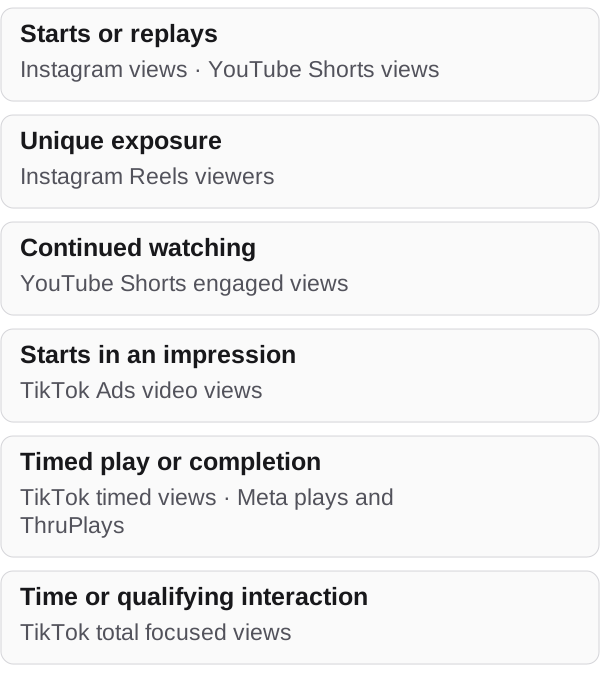
Download the reference table (CSV). The download contains the rows shown above, with their scope and review date. It does not contain campaign results or a completed assessment of your business.
Use the YouTube advertising guide and Instagram Reels creative guide for the campaign context around these definitions.
Evidence and scope
- As-of date
- September 14, 2026. Sources reviewed for this article; the editorial allocation is September 13, 2026.
- Method
- Ten selected definitions transcribed into a comparison table from four first-party help references. Paid and organic surfaces remain separate; exclusions are explicit.
- Limits
- Not exhaustive. Organic TikTok and Facebook organic counters are outside scope. No inferred watch threshold for Shorts engaged views, cross-platform deduplication or performance ranking.
06 — Next stepKeep the definition beside the total
Keep the definition beside the total
Before comparing two view counts, establish that they measure the same behaviour. When they do not, show the difference. A smaller, clearly defined measure of useful attention is more actionable than a larger total assembled from incompatible events.